Family Patterns · one component of the pattern
Daddy's girl, mother's boy.
Everyone already knows the first half of this pattern. A daughter who is the apple of her father's eye. A son who is his mother's whole world. Folk language has names for it in every culture, and nobody needs it explained. What this page adds is a witness: Shakespeare, who staged that bond more often and at higher voltage than any other family bond he wrote, and who kept the other bonds, father and son, mother and daughter, in a different register entirely. This is one piece of the larger pattern this project describes, not the whole of it. It is the piece to start with because you will recognise it at once.
The map at a glance
The pattern says that temperament runs across sex, from father to daughter and from mother to son, and that this is where a family's most intense parent and child bonds sit. Not the warmest, necessarily. The most intense. Here is how the plays line up with that claim.
| Bond | Where Shakespeare puts it | Register |
|---|---|---|
| Father and daughter | Lear and Cordelia, Prospero and Miranda, Capulet and Juliet, Shylock and Jessica, Pericles and Marina, and every one of the late plays about a lost daughter found again. | The signature bond. Tenderness to possession, always at full intensity. |
| Mother and son | Volumnia and Coriolanus, Gertrude and Hamlet. | Intimate, enmeshed, and the one place a mother claims to have made her son. |
| Father and son | Henry IV and Hal, Leontes and Mamillius. | Judgement, succession, proof of paternity. Not intimacy. |
| Mother and daughter | Almost nowhere. Juliet confides in the Nurse, not in Lady Capulet. | The famous absence. |
| Father and son-in-law | Brabantio and Othello, the Capulets and the Montagues, Cymbeline and Posthumus. | The hinge a marriage turns on, and the engine of the plot. |
| Grandparents | Barely present. Three of the family plays contain no grandparent at all. | The third generation, missing from the stage. |
The bond everyone recognises
Folk knowledge"Daddy's girl." "A mother's boy." "The apple of his eye." "Papa's little princess." These are not clinical terms; they are what families say about themselves, and they are said with a knowing look because everyone has seen the thing they name. A father who is stern with his sons and helpless before his daughter. A mother who reads her son's moods before he knows he has them. The phrases are affectionate, teasing, sometimes a warning. What they have in common is that they cross the sexes, and that they describe intensity rather than instruction. Nobody says a boy is his mother's boy because she taught him to cook.
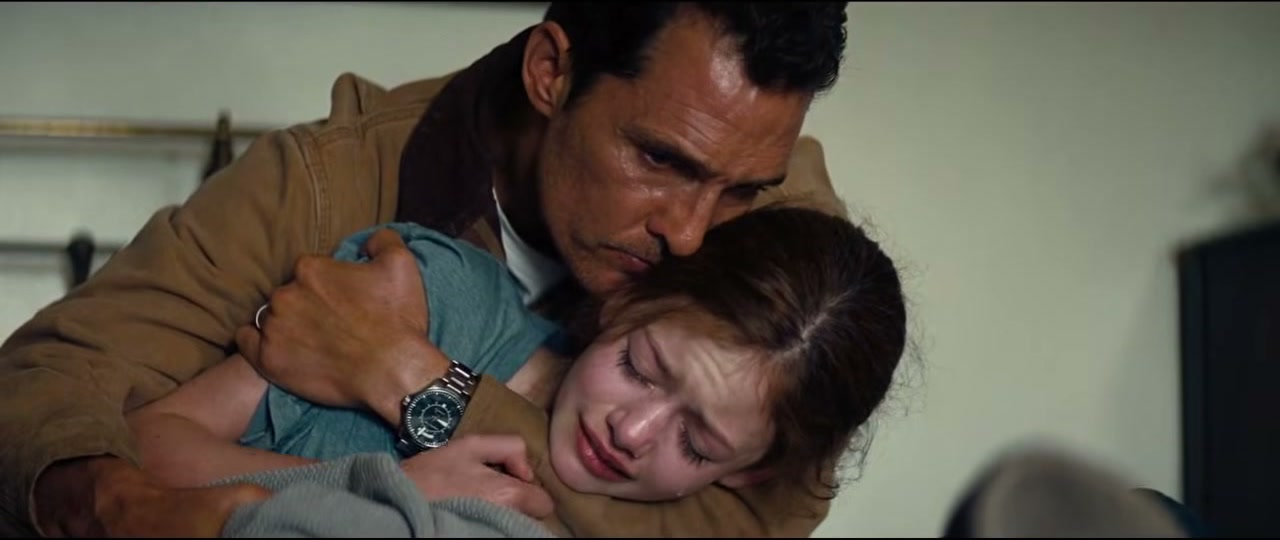
This project's claim is that the folk phrases are pointing at something real and regular: that a child's temperament, the wavelength a person runs on, tends to come from and bond to the parent of the other sex. The rest of the pattern, the step to the grandparents, is on the main page. This page stays with the first step and asks a simple question. If the cross-sex bond really is the intense one, the writer who understood families best should have reached for it whenever he needed intensity. Did he?
Father and daughter: the signature bond
Highest voltageHe did, and overwhelmingly. Shakespeare's father and daughter scenes are where his plays run hottest. The bond takes every form from devotion to ownership, but it is never lukewarm. Lear divides a kingdom over a daughter's refusal to flatter him, and dies holding her body.
"I lov'd her most, and thought to set my rest / On her kind nursery." Lear on Cordelia, King Lear
"Her voice was ever soft, gentle, and low, an excellent thing in woman." Ian McKellen as Lear, with Romola Garai as Cordelia. King Lear, directed by Trevor Nunn (Royal Shakespeare Company / Channel 4, 2008).
- Prospero to Miranda:
I have done nothing but in care of thee, / Of thee, my dear one, thee, my daughter.
The Tempest. A father who has organised an island, a storm and a decade of exile around one girl. - Capulet to Juliet:
And you be mine, I'll give you to my friend; / And you be not, hang, beg, starve, die in the streets.
Romeo and Juliet. The same current, turned to possession. Intensity, not warmth, is the constant. - Titus on Lavinia:
he that wounded her / Hath hurt me more than had he killed me dead.
Titus Andronicus. - Shylock on Jessica's flight:
My own flesh and blood to rebel!
The Merchant of Venice. The language of inheritance surfaces at the exact moment the bond breaks. - Pericles, finding Marina alive:
Thou that beget'st him that did thee beget.
Pericles. The daughter as the one who brings the father back to life.
That last line is the key to the late plays. Pericles, Cymbeline, The Winter's Tale and The Tempest are all, at bottom, stories of a father and a lost daughter reunited. When Shakespeare wanted to write resurrection, this is the bond he chose to carry it.
Mother and son: "thy valiantness was mine"
The transmission, said out loudThe other cross-sex bond is rarer in the plays, because Shakespeare's stage mothers are rare, but where it appears it is the most explicit statement of the pattern in English. Volumnia does not say she raised Coriolanus well. She says that what he is, he got from her.
"Thy valiantness was mine; thou suck'dst it from me, / But owe thy pride thyself." Volumnia to Coriolanus, Coriolanus
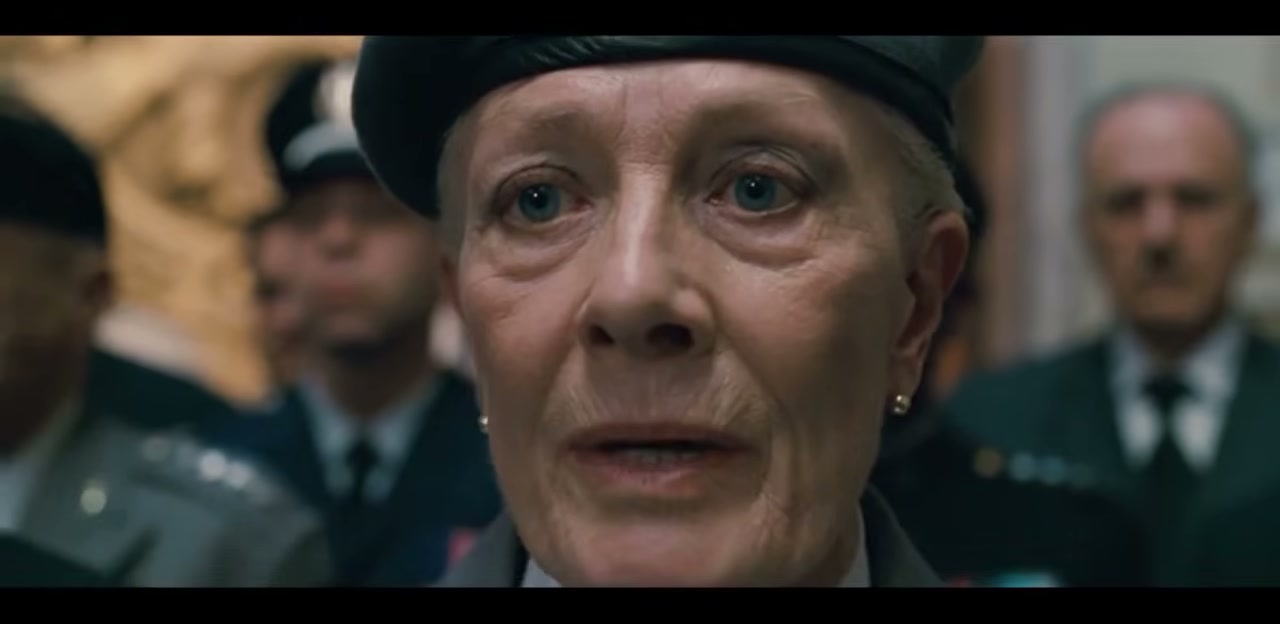
A mother claiming authorship of her son's essence, and drawing the line precisely: the valour is hers, transmitted; the pride is his own. Four centuries later the same claim turns up in ordinary families, in letters and at kitchen tables, in almost the same words. Gertrude and Hamlet give the bond's other face, the closeness that has no door.
"Thou turn'st mine eyes into my very soul, / And there I see such black and grained spots." Gertrude to Hamlet, Hamlet
The son can see into his mother in a way no other character in the play is allowed to see into anyone. That access, wanted or not, is the mother and son bond at the intensity the pattern predicts.
The control group: fathers and sons, mothers and daughters
A different registerA claim about the cross-sex bond only means something if the same-sex bond looks different. In Shakespeare it does. Fathers and sons meet over judgement, succession and the rod, not over tenderness. Henry IV looks at Hal and sees a punishment sent for his own sins.
"thou dost in thy passages of life / Make me believe that thou art only mark'd / For the hot vengeance and the rod of heaven / To punish my mistreadings." Henry IV to Prince Hal, Henry IV, Part 1
The same scene, a few lines on: the king tells his son that every eye is weary of him, "save mine, which hath desired to see thee more". Jeremy Irons and Tom Hiddleston, The Hollow Crown: Henry IV, Part 1 (BBC, 2012). Judgement first; the tenderness only slips out at the end.
When a father and son are said to resemble each other, it is evidence in a paternity case, not closeness.
Leontes, sick with jealousy, studies his boy Mamillius: yet they say we are / Almost as like as eggs
.
Paulina certifies the newborn as the whole matter / And copy of the father
. Same-sex resemblance in
Shakespeare is forensic.
And the mother and daughter bond is famously almost missing from the whole canon. Juliet's confidante is the Nurse. Lady Capulet is a stranger in her own daughter's bedroom. Cordelia, Miranda, Jessica, Marina, Perdita, Imogen: motherless, every one. Whatever the reason, the effect is the same. The same-sex female line is not where Shakespeare looked for intensity, and three centuries later the Victorian novels this project has scanned show the same hole.
The hinge: fathers and the men their daughters marry
Where the plot turnsOne more bond, and it is the bridge to the rest of the pattern. Shakespeare treats the bond between a father and his son-in-law as a load-bearing wall. Brabantio, robbed of Desdemona, poisons her marriage in a single line that Othello never forgets: "She has deceived her father, and may thee." Iago only has to repeat it.
"Look to her, Moor, if thou hast eyes to see: / She has deceiv'd her father, and may thee." Brabantio to Othello, Othello
Romeo and Juliet is, read this way, a war between two fathers so total that the marriage produces no children at all. Cymbeline banishes his son-in-law and the whole play is the cost of that, paid by the daughter. The pattern's longer version says that strife between a father and his father-in-law is what blocks a family's line from reaching the third generation. Shakespeare never shows the third generation. But he puts the strife exactly where the pattern says the damage is done.
What Shakespeare leaves out
The missing grandparents
Here is the honest limit of the witness. The full pattern has three generations: the bond crosses sex at
the parent step and lands on a grandparent. Shakespeare's stage families almost never have a grandparent
in them. Across twelve family plays there are a handful of grandparent lines; Lear,
Coriolanus and Pericles have none. The fragments that do exist point the right way. The
French fear Henry V as a stem / Of that victorious stock
. Belarius marvels that the kidnapped princes
in Cymbeline, raised in a cave, carry an invisible instinct
that should frame them / To
royalty unlearn'd, honour untaught
: inheritance without teaching, from ancestors they never met. And
the Duchess of York in Richard III, the one real grandmother on the stage, ends by cursing her
grandson.
So Shakespeare neither confirms nor refutes the three-generation claim. His form never assembles three living generations to test it. What he supplies, at the highest level of craft in the language, is each component on its own: the cross-sex bond as the intense one, the same-sex bond as the bond of authority and lineage, the mother who claims her son's essence, and the son-in-law bond as the hinge. The pattern, taken apart, with every piece present and none of them assembled.
Not a claim about Shakespeare
Nothing here says Shakespeare knew a pattern or believed one. It says that when a writer with his ear for families needed the strongest bond available, he reached across the sexes, and when he needed distance, judgement or proof, he reached along them. That is the first half of the pattern, seen from a source nobody can accuse this project of having chosen for convenience. The second half, the step to the grandparents and what happens when the line between them is blocked, is where the project's own work lies. Start with the half you already recognise.
← Back to Family Patterns · Two goodbyes: Interstellar → · Ridley Scott filmed the whole pattern →